1. Your Phone is a Stalker (and That’s a Good Thing)
Let’s be honest – your phone knows more about your daily habits than your family group chat.
You’ve searched “best chai near me” once and now Google behaves like your overly observant friend:
“Psst… try the one 120 meters from your house. Also, they have methi pakoda and aloo tikki.”
Welcome to GEO – Geographic Optimization – where search results aren’t just personalized; they’re eerily intuitive.
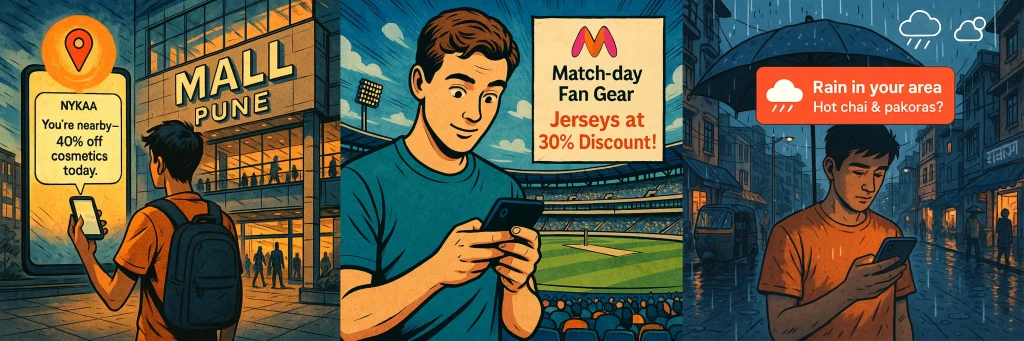
Hyper-local targeting is no longer “the future.” It’s that notification you got right before it started raining suggesting you order pakodas.
Google isn’t creeping on you.
It’s curating for you.
There’s a difference… mostly.
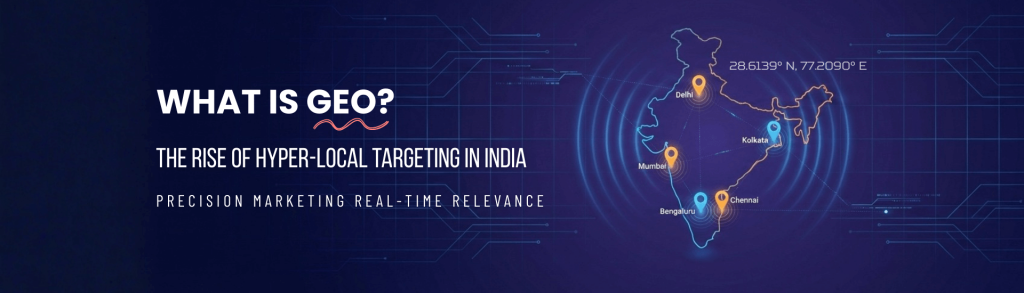
2. What is GEO Really?
If SEO helps you show up when people search,
GEO helps you show up where and when they search.
GEO is basically:
“How do I make sure my brand appears exactly where my customer is, right when they need me?”
Example:
Google Maps doesn’t just show “mechanics near me.”
It shows “open mechanics near me,”
then prioritizes the one with good reviews, shortest distance and the highest likelihood of saving your ruined weekend.
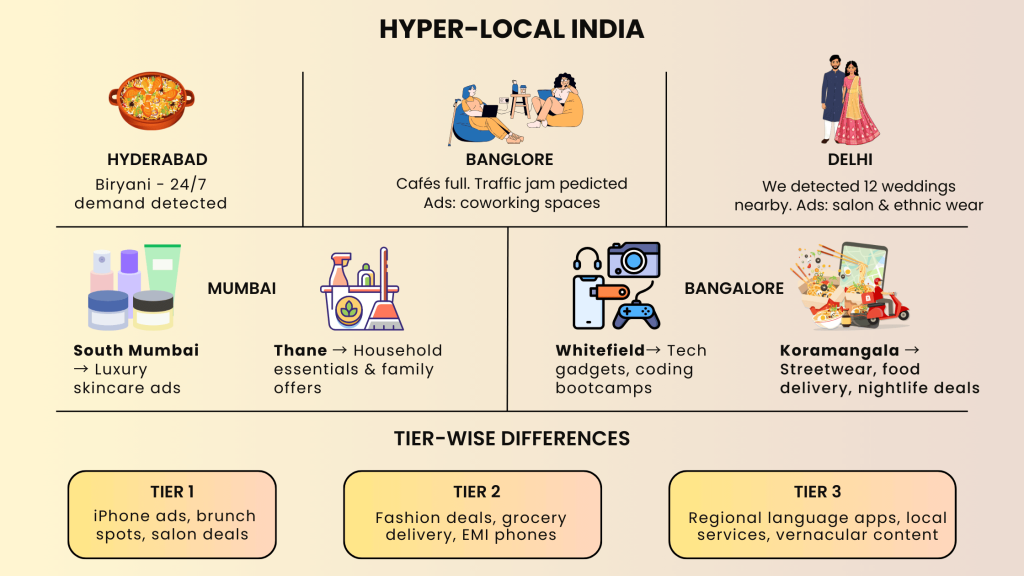
Try searching for “Biryani near me” in Hyderabad vs Delhi vs Kolkata.
You’ll think you jumped universes.
Hyderabad gives you a spreadsheet of legendary spots.
Delhi shows experimenters.
Kolkata says, “Try something with potatoes.”
That’s GEO.
Not just location-aware.
Location-intelligent.
3. Local SEO vs GEO Optimization
Local SEO is the basic version.
It’s like putting your shop’s name on a signboard.
Helpful, but… meh.
GEO Optimization?
That’s putting a signboard, hiring a drummer and giving free samosas to everyone passing by the exact moment your target audience crosses your lane.
In simpler terms:
- Local SEO = “List your business on Google.”
- GEO = “Show up at the right pin code, right landmark, right mood, right craving.”
Real example:
Blinkit knows exactly when your area starts craving ice cream.
If it’s 10 PM and 28°C in Ludhiana, you’ll magically see “Ice Cream in 10 minutes” pushed to your feed.
That’s not a coincidence.
That’s GEO whispering:
“I got you.”
4. Why GEO is Exploding in India
India isn’t just a country; it’s a hyper-local universe.
Change your pin code and your food, language, slang and even Google search results change.
This is why GEO thrives here:
- 5G is everywhere.
- Affordable smartphones = 800M+ location-enabled users.
- Mappls (MapmyIndia), Google Maps and local e-commerce apps track micro-movements.
- People in Tier 2/3 cities rely heavily on search and WhatsApp for purchase decisions.
Real example:
Meesho doesn’t push the same collection to everyone.
A Punjabi student in Mohali sees denim jackets.
A Tamil homemaker in Coimbatore sees sarees and kitchen tools.
A Kanpur small-business owner sees wholesale bundles.
Same app.
Same categories.
Different realities.
GEO isn’t just “targeting.”
It’s “understanding India.”
5. The Rise of Micro-Moment Marketing
The holy grail of GEO is the micro-moment –
the tiny slice of time when your customer is ripe for action.
Example moments:
- It starts drizzling → Zomato: “Hot chai and pakodas?”
- Fuel prices rise → Uber: “Save with Uber Auto.”
- You’re near a mall → Nykaa: “Flat 40% off at our store.”
- College fest week → Myntra pushes campus fashion.
These are not random.
They’re calculated, geo-temporal nudges –
ads that hit at the perfect moment when relevance = highest, resistance = lowest.
The magic formula:
Location + Timing + Intent = Conversion.
GEO doesn’t just show ads.
It predicts cravings.
6. GEO for Brick-and-Mortar + E-commerce
2026 is the year online and offline finally stop fighting and start dating seriously.
Your store doesn’t just get footfall from walk-ins –
it gets footfall from geo-triggered notifications.
Examples:
- A restaurant sends a “dessert on the house” coupon when users walk within 200 meters.
- An apparel store sends “Try our new collection” when a loyal customer enters the mall.
- A gym triggers “Free trial today” when someone walks past it for the third time this month (yes, apps notice).
- A salon pushes a deal when the humidity spikes (because frizz = money).
For e-commerce brands, GEO is even deadlier:
- Show “delivery in 10 minutes” to users near a dark store.
- Reduce cart abandonment by offering hyper-local discounts.
- Auto-switch product catalogues based on weather (umbrellas in Mumbai, AC filters in Jaipur).
GEO makes your brand feel like it’s everywhere your customer goes, without being creepy.
Okay, maybe a tiny bit creepy.
But effective.
Here is a sharp, witty, self-aware closing section and conclusion for the GEO blog – written in the same voice, tone and format as the earlier points.
7. The Future of GEO: When Ads Will Know Your Mood Too
If 2020–2024 was “location-aware,”
2026 is “context-aware.”
Your phone won’t just know where you are –
it will know what state of mind you’re in.
Examples coming very soon (and already in beta somewhere in the wild):
- You search “breakup songs” → Swiggy pushes “Ice Cream BOGO” before the second chorus hits.
- You walk into Decathlon → Apple Music triggers your “Fitness Motivation” playlist automatically.
- You step out of a salon → A perfume brand runs a geo-filtered beauty ad because they know you’re already in self-love mode.
And the wild part?
Users like this.
We’ve grown so accustomed to hyper-personalization that anything less feels outdated.
GEO is not targeting.
It’s anticipation.
Which is why smart brands are shifting from “catching attention” to catching context.
8. GEO Mistakes Most Brands Make
Let’s not pretend GEO is easy.
Brands mess it up all the time – spectacularly.
Here are the top sins:
1. Using the Same Ad for Every Location
Delhi customers don’t behave like Cochin customers.
Hyderabad at 6 PM needs different messaging than Jaipur at 6 PM.
You can’t run pan-India ads and call it “local strategy.”
2. Not Syncing with Weather, Events, or Traffic
If the temperature hits 38°C and you’re not selling cold drinks, your GEO team is asleep.
If there’s a cricket match, festival, concert or farm protest nearby – your ads should reflect it.
3. Forgetting That India Has 1,000 Micro-Markets
Even within one city:
- South Mumbai ≠ Thane
- Gurugram CyberHub ≠ Old Gurgaon
- North Bangalore ≠ Whitefield
- Ludhiana Sarabha Nagar ≠ Model Town
GEO is a scalpel, not a hammer.
9. The GEO Playbook for 2026: What Smart Indian Brands Will Do
If you want to stay ahead, here’s the cheat sheet:
• Build Hyper-Local Content Libraries
Different creatives for different pin codes.
No excuses.
• Integrate GEO with CRM Data
Segment based on past visits, purchase history and behavior patterns.
Your regular customer should not get the same ad as a stranger.
• Sync GEO with AI Predictions
Let AI tell you when a customer is likely to buy, cancel, upgrade or snack.
Meet them there.
• Use GEO for Storytelling, Not Just Sales
A brand that says “Stay safe, heavy rain ahead in your area” will be remembered more than a brand that says “Buy now.”
Value > Volume.
• Respect User Boundaries
No sending notifications every time someone leaves their house.
You’re a brand, not a clingy ex.
10. Final Thoughts: GEO is Not Just a Tool – It’s a Superpower
Here’s the truth no agency wants to admit:
Most brands are still playing SEO cricket while the world has moved to GEO Formula 1.
SEO tells people what you sell.
GEO tells them when, where and why they should care.
A Bangladesh supporter in a Kolkata stadium sees different ads than a couple shopping in Chandigarh.
A corporate worker in Bandra sees different recommendations than a college student in Varanasi.
A homemaker in Lucknow gets different suggestions than a newly married couple in Surat.
That’s not advertising.
That’s telepathy at scale.
And in a country as diverse, chaotic, delightful and beautifully unpredictable as India –
telepathy wins.
The brands that master GEO will feel “magically present” to their customers.
The brands that ignore it will feel invisible.
Your location isn’t just a pin on a map anymore.
It’s your marketing advantage.
And if you learn to use it well?
You won’t just be found.
You’ll be felt.